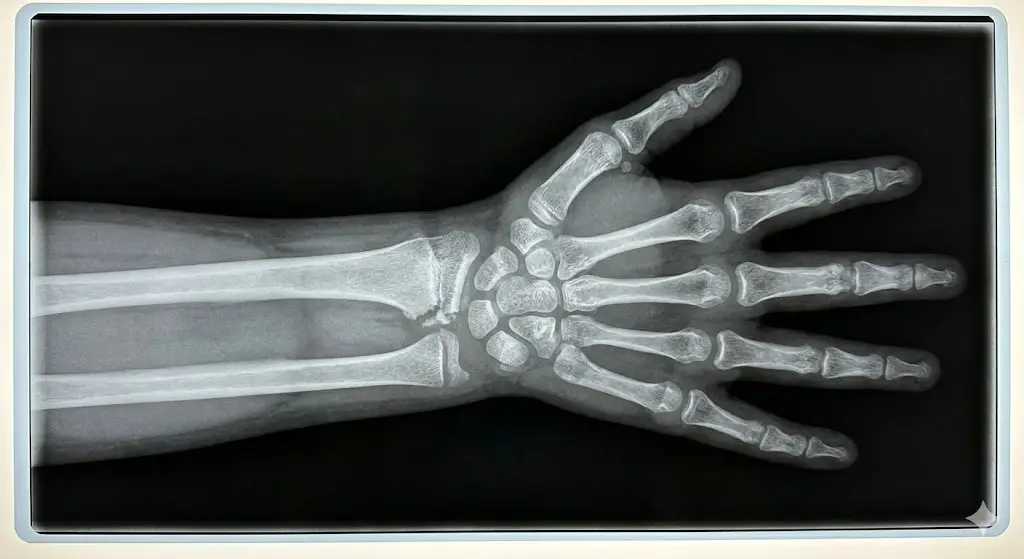
Treatment and monitoring of a child's fracture
Fractures in children differ significantly from those in adults. Depending on the age, a child's bone is still highly remodeled, which is why treatment lines are selected individually according to the child's age and growth stage.
Why is a child's fracture special?
There are several features of a child's skeleton that make diagnostics and treatment different compared to adults:
Interpretation of X-ray images: Children's bones have growth lines, growth centers, and cartilaginous parts that differ from adult bones. Therefore, interpreting the images requires an experienced eye to distinguish a fracture from a normal growth line, for example.
The Power of Growth (Remodeling): The younger the child, the better their body's ability to correct the misalignment of the fracture as they grow. This is why younger children can be allowed to have significantly larger misalignments than older children or adults - and the end result will still be as good as new in the long run.
Treatment modalities
Most fractures in children are easily treated with a cast, but in light of current knowledge, not all fractures may even require a cast.
Cast-free treatment: Certain typical fractures, such as those of the wrist willow twig fractures, heal perfectly without a rigid cast. So do some fractures in very young children.
Plaster treatment: If the fracture requires support, a cast is usually used for a few weeks (small children) to up to six weeks (some fractures in older children).
Individual treatment decision: The treatment is influenced by the child's age and size. For example, a fracture in a 5-year-old child is often treated differently than an 11-year-old because the younger child has a greater potential for repair.
Growth line fractures and monitoring
If the fracture extends growth line, sometimes the situation needs to be monitored more closely. The growth line is the area where the bone grows in length, and damage in this area can affect the normal growth of the bone.
Post-inspection: In growth line fractures, a new X-ray is sometimes taken approximately At 6 months.
What is being monitored? The image ensures that the growth line has not ossified prematurely at the fracture site, which could lead to growth failure.
Home care instructions with a cast:
Monitor blood circulation: If the toes or fingers turn blue, become cold, or the child complains of severe tingling, contact a doctor.
Pain management: Give painkillers (paracetamol/ibuprofen) as directed by your doctor, especially in the first few days.
Gypsum purity: Keep the cast dry. A plastic bag as protection in the shower is essential.
HUS guidelines for treating fractures in children link
https://www.hus.fi/potilaalle/hoidot-ja-tutkimukset/lasten-ja-nuorten-murtumien-hoito